Commerce Budgets
Part of Commerce media procurement
Agreeing on access to campaign data before booking
Set a UK commerce media report’s fields, format, recipients and timing before booking, with a clear boundary for personal data.
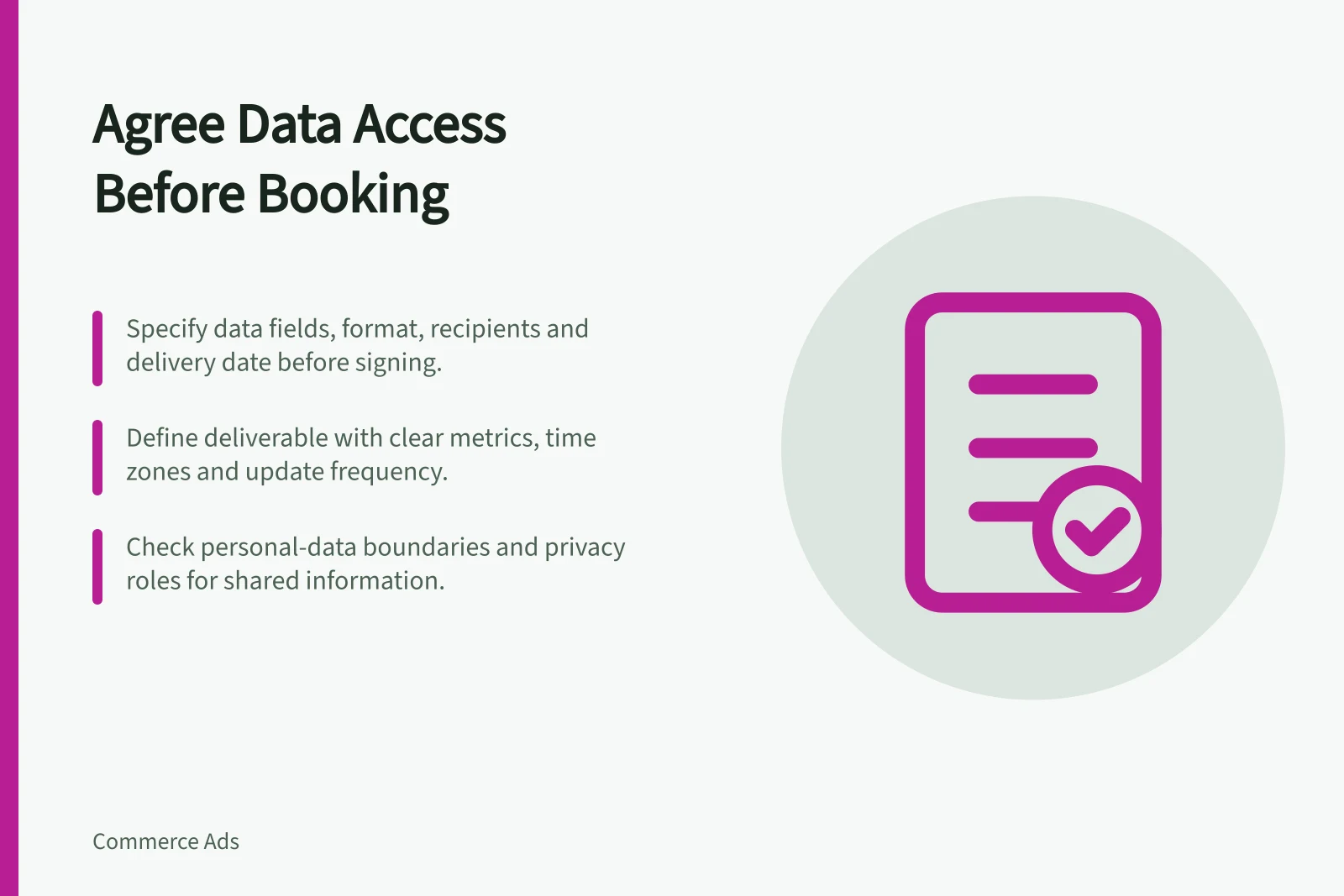
Before signing the media order, specify the data output the advertiser may receive. Document its fields, definitions, format, recipients and delivery date. Dashboard access does not necessarily include a downloadable file; an export is of limited use if its products or transaction rules are unclear.
Define the deliverable
Start with the decision the output must support. A delivery check may require the booked line, date, spend and reported impressions or plays. A review of credited sales needs the eligible products, sales channels, qualifying interaction and lookback window. An additional-sales claim needs a suitable comparison method; a sales extract alone cannot provide one.
Ask for a sample report or field list for the proposed account and format. Confirm metric units, time zone, available breakdowns, update frequency, final extract date and which values are observed, estimated or modelled. If the supplier cannot supply a field, record the decision that will remain unanswered.
| Access term | Agree before booking |
|---|---|
| Recipients | Which advertiser and agency roles can see and retain the output. |
| Output | Dashboard view, downloadable file or another specified route, with fields and definitions. |
| Timing | In-flight access, final delivery and any delay for attributed sales or returns. |
| Duration | Access expiry and retention of agreed extracts. |
| Correction | Contact, correction process and version labels for revised data. |
Check the personal-data boundary
An aggregate campaign report need not include customer-level records. If the proposed output or analysis involves personal information, map the real flow and have the responsible privacy team assess the parties’ roles, purpose, permitted use and retention.
The ICO says it is good practice (though not mandatory) to have a data sharing agreement between the parties sharing personal data. Its data-sharing guidance is under review following the Data (Use and Access) Act, so apply the current requirements to the actual arrangement.
Do not assume an agency’s need to assess campaign delivery gives it access to individual shopping histories. If a planned join cannot be authorised or supplied, change the analysis or leave that part of the booking open.
Key Data Sharing Considerations under UK GDPR
- Mandatory data sharing agreement?
- No (but good practice)
- Data flow mapping required?
- Yes, if personal data is involved
- Agency access to shopping histories?
- Not automatic – requires authorisation
- Review status of ICO guidance
- Under review following Data (Use and Access) Act
Accept the handoff
Attach the agreed output specification to the order and name its recipient. At delivery, check that the promised fields, periods and definitions are present and that the output can be retained as agreed. Keep the original and any corrected extract as separate versions. Book on a narrower reporting basis only when the unanswered decision is understood and acceptable.