Retail Media Planning
Part of Commerce media procurement
Reconciling promised inventory with delivered placements
Match a UK commerce media order with delivered placements, record evidence gaps and settle exceptions under the actual terms.
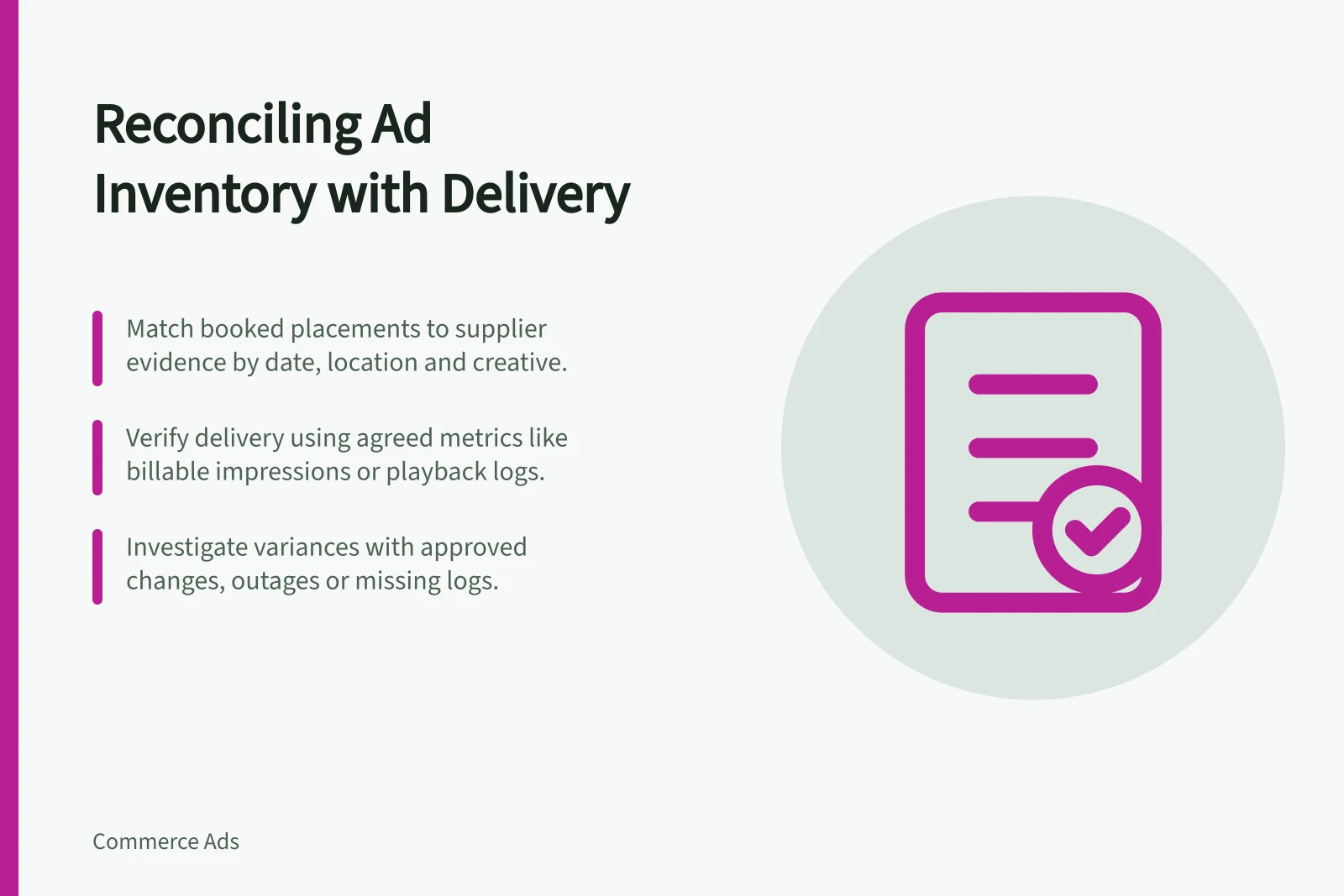
Compare delivery against the booking terms in force when each advert was due to run. Match the promised placement, location, period and buying unit to the evidence the supplier agreed to provide. A campaign total cannot confirm fulfilment of a particular page, store or screen.
Establish the baseline
Keep the accepted order and each dated amendment. For every line, note the placement or store group, dates, creative, buying unit, contracted quantity or rotation share where applicable, and any agreed substitution. Separate forecasts from contracted delivery. A later proposal does not replace the accepted baseline unless the change was approved.
Select a reconciliation key at the finest level that both the order and report support. This could be a digital placement and day, or a store screen and scheduled period. If the order names individual locations but reporting is network-wide, location-level fulfilment cannot be verified from that total.
Match evidence to what was bought
| Booked item | Request where available | Limit of the evidence |
|---|---|---|
| Online placement | Placement ID, dates, spend and billable impressions or clicks under the agreed definitions. | An impression that began rendering need not have been seen. |
| Store screen or audio | Location, creative, schedule, playback record and operating-status evidence. | A logged play alone does not prove that a shopper saw or heard the advert. |
| Estimated in-store audience | The traffic, location, timing and rotation assumptions used. | Opportunity to see estimates potential exposure, not observed attention. |
The IAB Europe online and in-store standards define distinct measures. Do not add ad plays to online impressions or treat an audience estimate as a playback record. A photograph may show an asset or position at one moment, but cannot establish delivery throughout the booking.
Investigate variances
For each difference, note the booked unit and period, reported delivery, evidence source, affected dates, explanation and owner. Check for an approved change, substitution, closure, outage or missing log before deciding what occurred. Mark the line verified, disputed or not verifiable. Keep the original and corrected reports with dates and version labels.
Ask the supplier how each material variance affects the invoice, replacement activity or another agreed treatment. The order and later approved changes govern the remedy; a numerical gap alone does not establish one. Align the final charge with the accepted delivery and adjustment record.
Keep sales outcomes separate. Attributed sales do not prove the booked placement ran, while verified delivery does not prove additional sales. End the reconciliation with the booked units, verified units, unresolved units and commercial treatment of each material exception.