Retailer Comparisons
Part of Retail audience planning
Comparing category buyers with lapsed brand buyers
Define category buyers and lapsed brand buyers consistently before comparing reach and results.
Category buyers and lapsed brand buyers answer different planning questions. Category buyers indicate past connection to the wider market. Lapsed brand buyers indicate past connection to your brand, with no recent purchase under a definition you set. Neither label proves current intent.
Define both groups before comparing them
Define both groups before comparing them
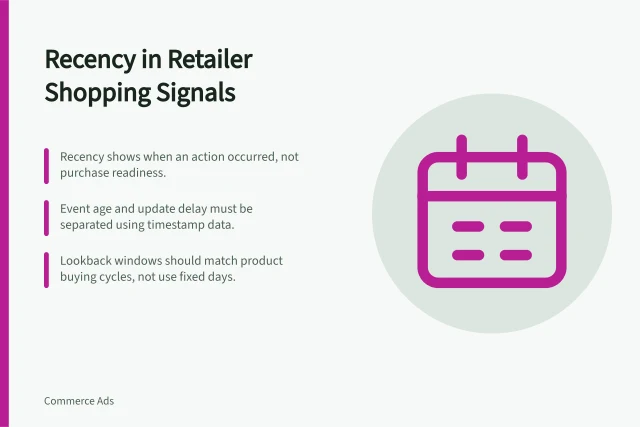
For category buyers, specify the products, channels, lookback period and data refresh frequency. A category can be broad enough to include several needs. For lapsed brand buyers, define both the earlier qualifying purchase and the gap with no subsequent brand purchase.
A shopper buying household items every few weeks should not be lapsed by the same rule as someone replacing a durable item far less often.
| Question | Category buyers | Lapsed brand buyers |
|---|---|---|
| Known observation | Qualifying category event | Earlier brand event and no later qualifying brand event in the defined window |
| Plausible campaign task | Introduce a relevant option | Re-establish consideration |
| Main ambiguity | Which need or competing product drove the category event? | Does the customer currently need to buy again? |
| Essential check | Product set and freshness | Purchase cycle and completeness of brand coverage |
This is a decision framework, not a performance ranking; the same person may be in both groups unless overlap is measured or excluded.
Category Buyers vs Lapsed Brand Buyers: Key Differences
- Known observationQualifying category event
- Plausible campaign taskIntroduce a relevant option
- Main ambiguityWhich need or competing product drove the category event?
- Essential checkProduct set and freshness
- Known observationEarlier brand event and no later qualifying brand event in the defined window
- Plausible campaign taskRe-establish consideration
- Main ambiguityDoes the customer currently need to buy again?
- Essential checkPurchase cycle and completeness of brand coverage
Choose a message each group can fairly receive
Choose a message each group can fairly receive
A category audience may respond to a clear product difference or range introduction. Do not assume dissatisfaction with a competitor. For a lapsed brand audience, a reminder of change may be useful only if the change is real and relevant. The message must not reveal or allude to an individual’s purchase history.
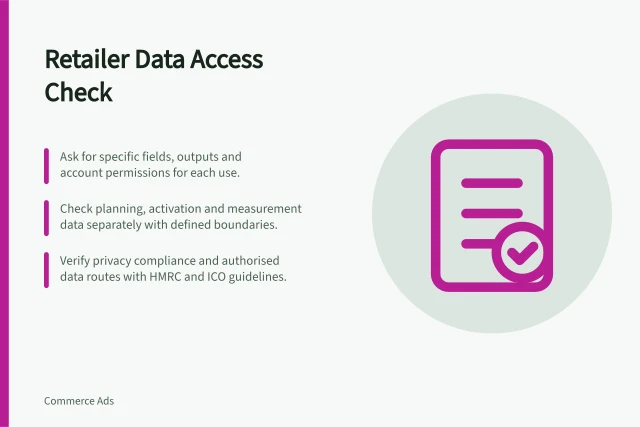
The UK ICO’s direct marketing guidance treats profiling as use of personal information that must be fair and transparent. Ask the retailer and your privacy team what use was explained to customers, what lawful basis applies, and how objections are respected. Do not infer permission solely from the audience being available in a buying platform.
Guidance on Messaging and Compliance
- ProsA clear product difference or range introduction may resonate with category buyers; a real and relevant brand update can re-engage lapsed customers
- ConsMessaging must not reveal or allude to individual purchase history; profiling must be fair, transparent, and compliant with UK GDPR and ICO guidance
Make the comparison interpretable
Make the comparison interpretable
If the goal is learning, keep product, offer, creative quality, placement and measurement windows as comparable as practical. Record unavoidable differences. Report delivered reach and frequency for each group, not just sales among exposed shoppers. A smaller lapsed group may show a different raw sales rate due to an existing brand relationship. That does not establish campaign causation.
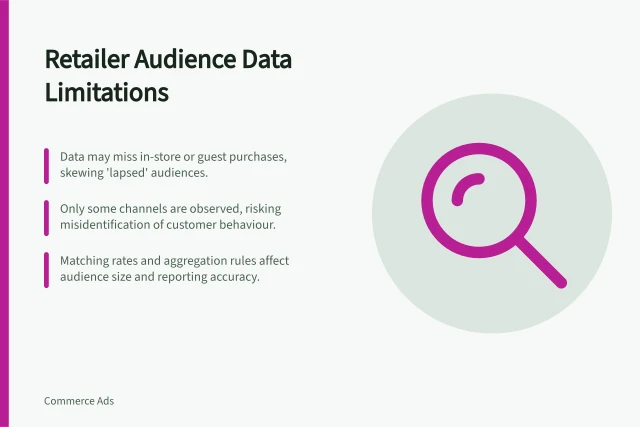
Ask whether recent purchasers are removed from both groups and whether the exclusion uses the same product set and refresh timing. Confirm how in-store and online purchases are represented. If only part of a retailer’s sales is visible, “no recent purchase” means “none observed in this dataset”, not none anywhere.
Key Considerations for Audience Definition
- Required consistency
- Product, offer, creative quality, placement and measurement windows must be comparable
- Reporting requirement
- Delivered reach and frequency for each group, not just sales
- Data limitation note
- "No recent purchase" means none observed in this dataset, not none anywhere
State the decision you can make
State the decision you can make
The useful conclusion might be that one group is reachable at the necessary scale, that one definition needs tightening, or that a controlled study is required before making an uplift claim. Preserve the limits in the report. A segment comparison is valuable when it improves the next audience decision, even without a clear winner.